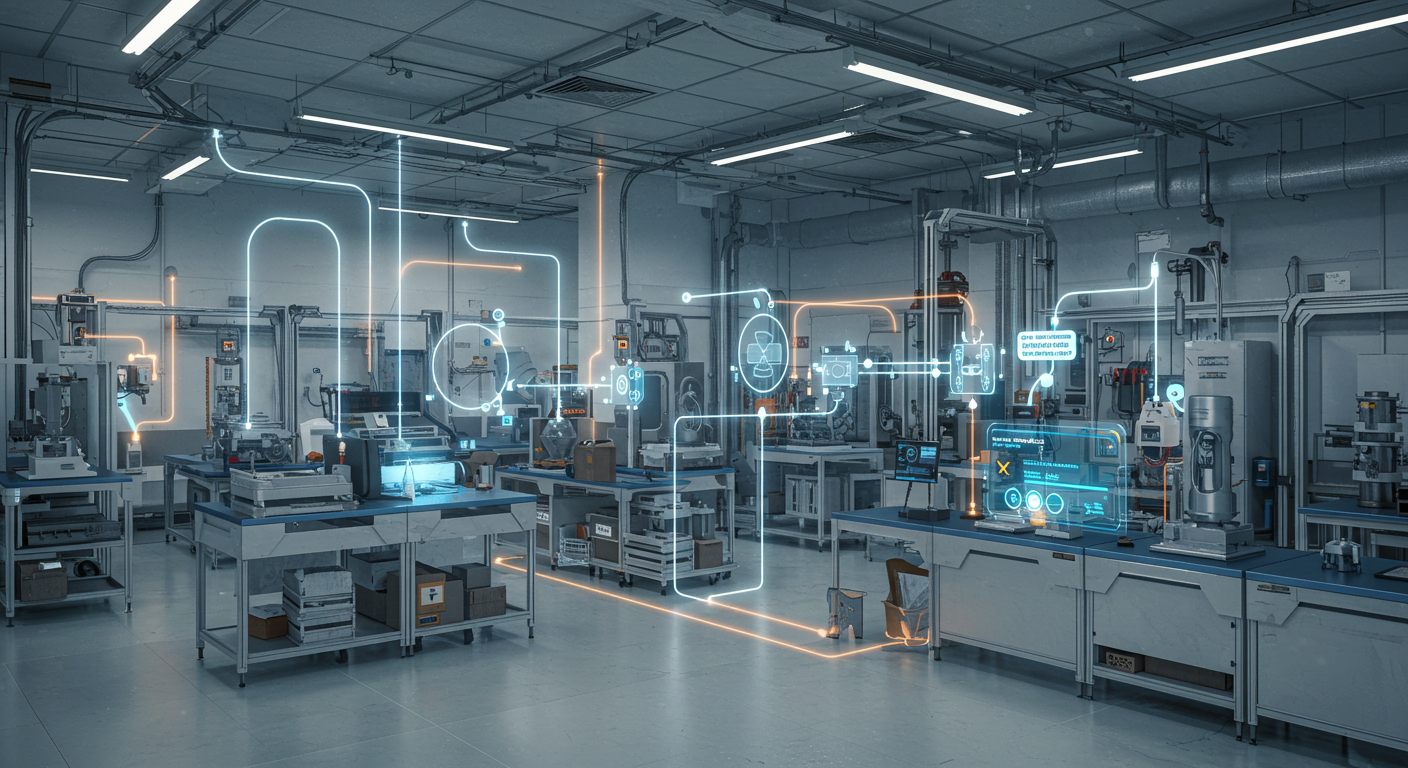

The Challenge: Manual Tracking and Inefficiencies
- Manual Effort: Tracking material usage, inventory levels, and flow across facilities was often manual and prone to errors.
- Lack of Visibility: Difficulty in getting real-time insights into material consumption and planning needs.
- Error Rate: Manual data entry and tracking led to inaccuracies impacting planning and control.
My Contribution: Developing an Integrated Solution
- Backend Development (Java/Spring Boot): I designed and implemented backend logic to handle automated computations related to material usage, inventory adjustments, and planning based on production data within the platform. This involved creating new entities, services, and APIs.
- Database Design (MySQL): I contributed to the database schema design to effectively store and query material-related data, ensuring data integrity and efficient retrieval.
- Frontend Integration (React.js): I worked on integrating these new backend capabilities into the user interface, providing visualizations and tools for users to manage and monitor materials seamlessly within the existing platform.
- Process Automation: The core aim was to automate calculations and improve connectivity between different stages of the manufacturing process reflected in the platform, reducing reliance on offline tracking.
- System Guidance: I guided the development through requirement gathering, specification documentation, coding, testing, and ensuring continuous support post-deployment.
The enhancements I developed led to remarkable improvements for our clients:
- Error Reduction: 50% decrease in material management errors.
- Manual Effort: 95% reduction.
- Process Speed: 25% improvement.
Technologies Used
- Backend: Java, Spring Boot
- Database: MySQL
- Frontend: React.js, TypeScript
- Domain: Additive Manufacturing processes